What Is Amazon Author Central (and How Is It Different From KDP)?
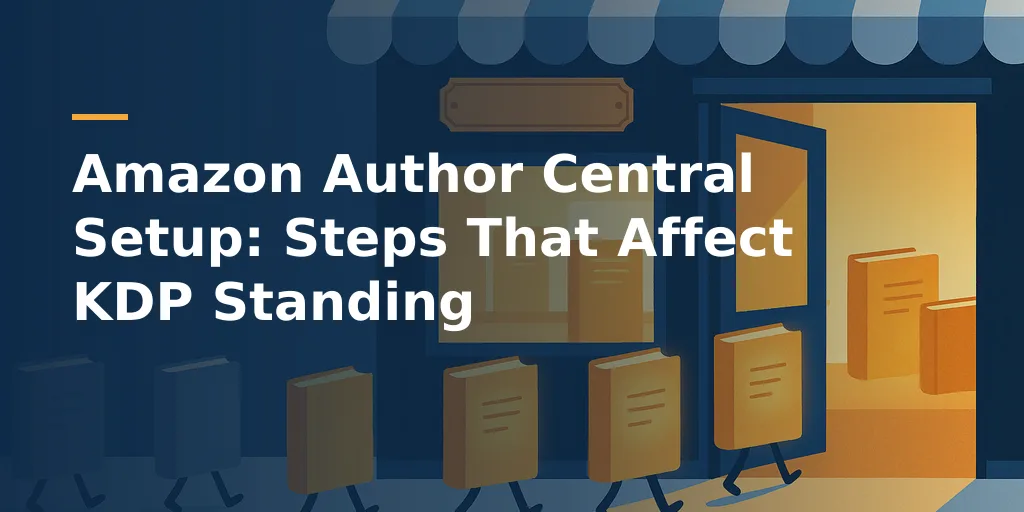
You just hit publish on KDP, searched your new book on Amazon, and the author name printed under the title doesn't link anywhere. That link, along with your bio, your photo and the list of everything else you've published, lives on your Amazon author page, built inside Amazon Author Central. Author Central is completely free to use, with no listing or subscription fee for authors, and it sits outside KDP entirely.
Author Central vs. KDP: Two Logins, Two Jobs
KDP is where you publish: uploading files (after you've locked in the typography settings your interior actually needs), setting a price, choosing categories, getting paid. Author Central is where you show up once that book is live, on a separate sign-in, doing a different job entirely. It only handles your public profile. Your book's price, category and royalty rate stay entirely inside KDP.
The profile controls four things: your author biography, your photo, the list of books credited to your name once you've claimed them, and any editorial reviews or recommendations you add underneath a title. The dashboard also surfaces some sales and reader-engagement figures for books you've claimed, though which numbers appear there has changed before and will again. Check what's actually there before you rely on an old screenshot of it.
Set Up Your Author Central Account in Under 10 Minutes
If you haven't published anything through Amazon yet, set up your KDP account first. Author Central only has something to claim once a book actually exists on Amazon's site. Once a title's live, the account side takes less time than picking a cover font.
- Go to authorcentral.amazon.com and sign in. Author Central and KDP use separate logins. Check inside each dashboard which email address it's actually tied to before you type anything into a profile field.
- Choose your marketplace. Author Central asks which Amazon storefront you're building a profile for first; pick the one your book was published on.
- Search for your book. Enter your author name or the book's title into the search field, then run the search.
- Select your book from the list and submit the claim. Amazon reviews the request before adding the title to your bookshelf, so there's a short wait between claiming and seeing it appear.
- Nothing shows up? Search again using the ISBN, with the dashes removed. The fuller claiming process, including what to do when a title still won't match, comes further down.
The Name-Match Rule: Fix This Before It Becomes a KDP Problem
Author Central has its own author-name field. KDP has two name-shaped settings of its own: the pseudonym you can declare for a title, and the legal name tied to your account for tax and payment purposes. Line all three up and this section doesn't matter to you. Let them drift apart and you've got a profile that says one thing while your books say another.
How the Name Fields Connect
When you claim a book, Author Central pulls the author name straight from that book's Amazon listing, not from your KDP payee name. The listing name is whatever you entered at the title level in KDP when you published, whether that's your legal name or a pseudonym declared for that book specifically. Your payee name never appears on the public page. What's public is exactly what you told KDP when you published the book.
Five Scenarios, One Table
This table was built by cross-referencing Author Central's own identity fields, author name and marketplace, against the pseudonym-declaration and payee-name checks described in BookBird's own KDP account-creation and account-termination guides, then stating one required action per scenario.
| Scenario | What to Enter in Author Central | What It Costs to Fix Later |
|---|---|---|
| Single legal name, no pen name | Your legal name, matching both your KDP payee name and the author name on your book listings. | Little. One name already flows through every field, so there's nothing to reconcile. |
| Pen name already declared for a KDP title | That exact pen name in the Author Central author-name field, even though your legal name still gets paid. | Every book already claimed under the wrong name needs correcting individually, since Author Central ties each claim to the name on that title's listing. |
| Multiple pen names across genres | One pen name per Author Central profile. A second pen name gets its own separate profile, with its own bio. | Books claimed under a shared profile have to be reclaimed under the right one, and each new pen name needs declaring at the KDP title level before it can be claimed at all. |
| Co-authored book | Whichever name appears as the credited author on that title's listing. Each co-author claims separately, under their own name. | Minimal. Amazon's listings already support multiple credited authors, so there's no shared field to untangle. |
| Legal name changed after publishing | Match Author Central to whichever name stays public on the listings going forward, whether that's the new legal name or an existing pen name. | Updating the author field on every live KDP title, then re-confirming the Author Central claim for each one. There's no single switch that renames a whole catalogue at once. |
The rule that matters most sits in row two. Match your Author Central name to whatever pseudonym you declared in KDP's bookshelf settings, not to your legal name if the two differ, before you publish a second book under it. Fixing a mismatch after several titles are live means correcting each claimed book individually rather than one profile. Still deciding on that name? Run a few options through the pen name generator before you declare anything at the title level in KDP; changing it after a book's live is exactly the scenario this table is warning against.
If you're publishing low-content books under a dedicated pen name separate from your main one, treat it as its own case from the first title: a separate Author Central profile with its own bio and its own claimed books, kept apart from the account you use for everything else.
Fixing a Mismatch Once Books Are Already Live
There's no bulk-rename tool inside Author Central. If a mismatch already exists across several published titles, correct the author name on each title's listing inside KDP's bookshelf first, then update the claim in Author Central to match. It's slower than fixing a single field once, which is the reason to get the name right before you publish book two.
This isn't a documented Amazon policy, and nothing here claims Amazon suspends or flags an account specifically over a name mismatch between Author Central and KDP. The table above is a precaution, built from how the two systems' identity fields interact. For the account-standing rules that are actually documented, check what actually gets a KDP account flagged.
Build a Bio, Photo, and Follow Button That Actually Work
These three pieces get covered as three separate steps everywhere else. They take about the same ten minutes together, so here's all of it in one place before the checklist at the end asks you to confirm you've done it.
Write a Bio Amazon Won't Truncate
Lead with genre and the reader who'd want the book. Skip the list of credentials up front; a thriller reader deciding whether to click doesn't care where you went to school. Write it in third person, since Author Central displays it as marketing copy on your author page, much like the book blurb you'll write for the listing itself.
Paste a draft into the actual field and preview the page before you save it. Amazon changes field limits and formatting rules without much notice, so a length that fit last year might not fit today. Preview beats memorising a number.
What Your Author Photo Needs to Clear
A plain background. Your face clearly visible. No book cover standing in for a photo of you. Beyond that, don't guess at pixel dimensions or file size from a blog post: upload the image and let Author Central's own validator tell you if something's wrong, since those technical requirements are exactly the kind of detail Amazon adjusts without announcing it.
Why the Follow Button Matters for Series Readers
Once it's switched on, readers who follow your profile get notified when you publish something new. It's the one feature on this page built specifically for someone writing a series or building a backlist. Confirm it's switched on inside your own profile settings; don't assume the default has it that way.
Claim Every Book — and Fix the Ones That Won't Claim
The quick version happened in the setup steps above. Here's the fuller process for getting a full catalogue onto your amazon author page, plus what to do when a title refuses to show up.
- Search by title and author name first inside Author Central's book search, and scan the results for the exact edition you're after.
- No match? Search again by ISBN, with the dashes removed. This catches titles a similarly spelled name has buried further down the results.
- Paperback, hardcover and Kindle editions of the same book often list as separate results. Claim each edition on its own if you want all of them credited to your profile.
- Submit the claim and let Amazon review it. There's a wait between submitting and seeing the title appear on your bookshelf, and Amazon doesn't publish a fixed turnaround for that review.
- Co-authored titles need a separate claim from each author, since Author Central doesn't have a joint-claim option; every named author runs their own search under their own account.
Still nothing? Double-check the ISBN entered on the KDP side matches what's printed on the live Amazon listing. For the publishing and distribution settings that produce that listing in the first place, the Amazon KDP hub covers the rest of the platform.
Add Editorial Reviews and Book Recommendations
Both live under a book you've already claimed, so claim the title first if you haven't already.
- An editorial review is the short quoted line that displays underneath a book's description on its Amazon listing, credited to whoever said it: another author, a reviewer, a trade outlet.
- Add it through the book's detail page inside Author Central. Paste the quote and its attribution into the field and preview the listing before saving; formatting that looks right on the input screen doesn't always carry over exactly onto the live page.
- Book recommendations are a short list of other titles you choose to surface from your profile, yours or someone else's, with no paid placement involved.
- Both features are optional. Both only shape what a reader sees once they've already found the listing, leaving your book's price, category and royalty rate untouched.
Amazon A+ Content is the next thing worth building out for changes that reach further into the listing itself.
Your Fixed Author Page URL and International Marketplaces
Two more pieces worth setting up now, especially if you plan to sell in more than one country.
Why You Can't Set a Custom Author Page URL Anymore
Author Central used to let authors set a custom vanity URL for their profile page. That option's gone: custom vanity URLs for Amazon Author Central profiles are no longer available since the platform's November 2026 update to a universal, worldwide-access page. The profile page itself is now universal, one page reachable from any storefront a reader clicks in from. What changes per storefront is the marketplace selector inside your own dashboard, which controls which storefront's data and fields you're actually editing at that moment, not the page's address.
Set Up Author Pages on Other Amazon Marketplaces
Author Central operates across Amazon's international marketplaces, but exact coverage and features differ by storefront. Confirm what's available in yours by switching the marketplace selector inside your own account, then check that your bio and your claimed titles actually render correctly on each storefront you sell in. A feature visible on one storefront doesn't automatically exist on another.
Your Author Central Launch Checklist Before You Publish Book Two
Run through this once, in order, before you start writing the next book under the same name.
- Bio written in third person, pasted into the live field, and previewed there before saving.
- Photo uploaded and displaying correctly on the profile, checked after saving.
- Follow button confirmed switched on inside your profile settings.
- Every current book claimed, including separate editions of the same title.
- At least one editorial review or recommendation added to your lead title.
- Author Central's name field checked against your KDP pseudonym setting for that book, the one item on this list worth a second look before you publish anything else under the name.
- International marketplace coverage checked, selector switched and bio and claimed titles confirmed rendering, if you sell outside your home storefront.
Frequently Asked Questions
How do I set up Amazon Author Central?
Go to authorcentral.amazon.com, sign in, choose your marketplace, then search for your name or your first title to submit a claim. The full walkthrough, including what to do if a book won't turn up, sits earlier in this piece.
Is Amazon Author Central free?
Yes. It's completely free to use, with no listing or subscription fee for authors.
What is the difference between Amazon Author Central and KDP?
KDP is the publishing dashboard: uploading files, pricing, categories, royalties. Author Central is the public author page that appears once a book's live, covering your bio, photo, claimed titles and reviews. Different logins, different jobs.
How long does Amazon Author Central verification take?
Amazon doesn't publish a fixed number for this one. Submit the claim and check your bookshelf directly for its status.
Can I have two Amazon Author Central pages under different pen names?
Yes. One profile handles one pen name. A second name needs its own account, its own bio, and its own claimed books.
Do I need Author Central to sell books on Amazon?
No. KDP alone will list and sell your book. Author Central is optional, but it's the only place that builds out a public page around it: bio, photo, reviews and all.