


What Is Love Poetry Called? The Named Forms From Ode to Aubade
Search love and poetry and most results are lists of romantic poems that skip the plain fact underneath the question: "love poetry" isn't a form at all. It's a…
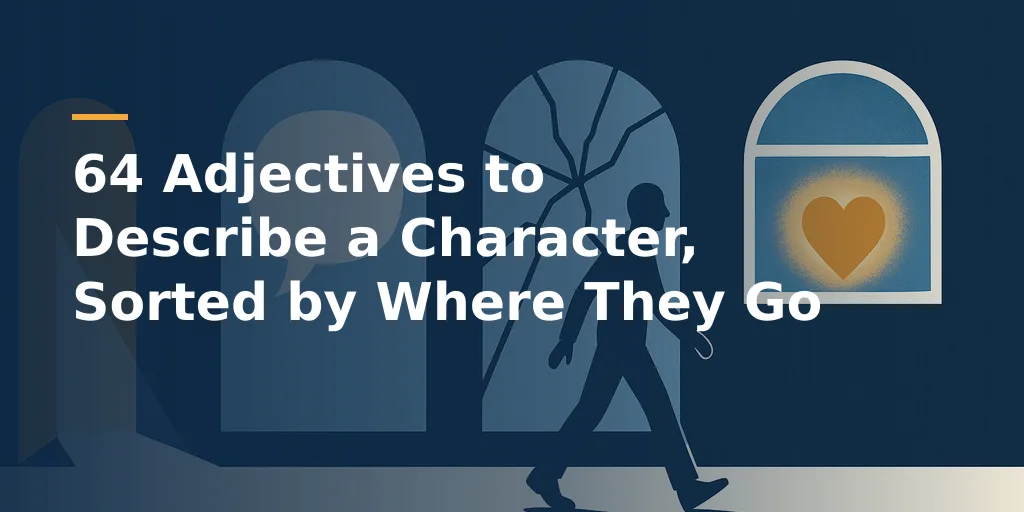
64 Adjectives to Describe a Character, Sorted by Where They Go in a Scene
An adjective to describe a person only earns its place if it's doing a job in the sentence around it: introducing them, tagging how they speak, revealing a…
How to Build Situational Irony Into Your Plot (Not Just Spot It)
A locksmith locked out of his own house. A lifeguard who nearly drowns on his day off. That's the shape of situational irony: an outcome that turns out…
17 Types of Antihero: A Character Spectrum for Novelists
Your protagonist breaks rules a straightforward hero wouldn't. The useful question is where exactly on the antihero scale they sit. An antihero (also spelled…
What Is a Story's Theme? How to Build One for Your Book
The theme of a story is the central idea it argues about being human, built from what characters do rather than from anything a narrator states outright. What…
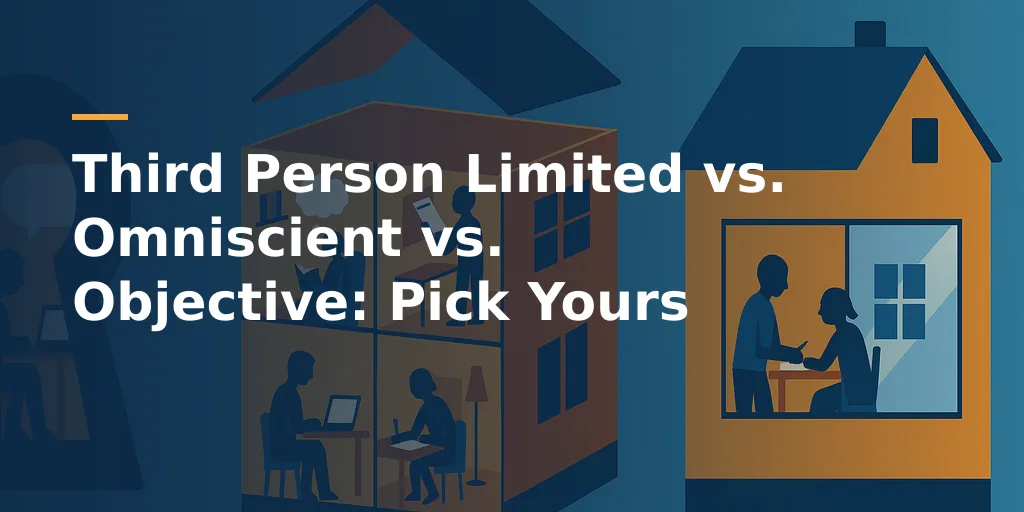
Third Person Limited vs. Omniscient vs. Objective: Pick Yours
If a beta reader circled a page and wrote "whose head are we in here?", you've already met the problem this article solves. Third person point of view narrates…
68 Personification Examples Sorted by What's Personified
If you're stuck on a storm scene, a ticking clock, or a car that won't start, you don't need a lecture on rhetorical devices. You need personification examples…
Prologue vs. Epilogue: What Each One Is For
You just wrote a closing chapter and it doesn't feel like a chapter. It feels like something that happens after the book is finished, and that's what an…
Typography for Self-Published Books: What to Set Before KDP
Typography for your self-published book comes down to five settings: typeface, point size, leading, margin and a font-embedding check, each one checked against…
Foreshadowing That Doesn't Spoil the Twist
Foreshadowing is a hint planted early in a story that only makes sense once a later event pays it off. It only works if the reader doesn't notice it's a clue…